Our own trucks
Greer holds the transporter permit and runs the equipment. Your load is not brokered to whoever is cheapest that week.

Greer Enterprises profiles, packages, manifests, transports and disposes of hazardous and non-hazardous waste for manufacturers, refineries, laboratories, shipyards and government facilities across 8 Southeastern states — on its own permits and its own trucks, out of Mobile and Tampa.
Greer holds the transporter permit and runs the equipment. Your load is not brokered to whoever is cheapest that week.
A profile before collection, a manifest with the load, and a certificate once it is destroyed. Generators keep manifests three years.
Certified Hazardous Materials Managers profile the stream, so the waste codes are not your guess to make.
Lab pack for a single shelf of reagents, roll-offs and end dumps for bulk soil and debris. Same profile, same manifest.
Profiling, transport and disposal under one roof, so nothing is handed to a broker between your dock and the receiving facility. Four service lines, thirty-two services, one profile.
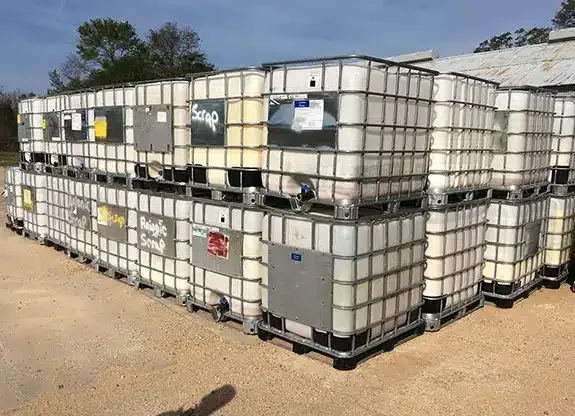
RCRA hazardous and non-hazardous streams, from a single lab pack drum to a plant-wide clean-out. Twenty-one disposal routes, one profile.
Explore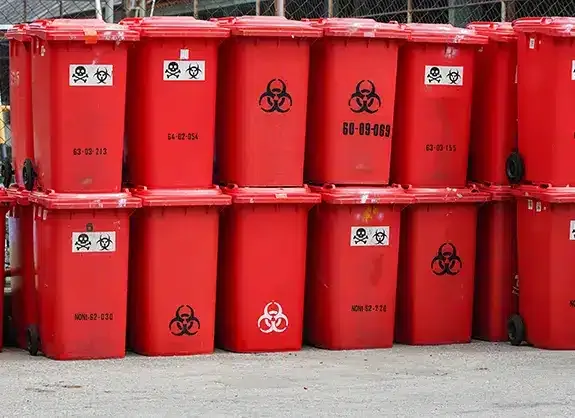
Regulated medical, pathological and pharmaceutical waste for hospitals, laboratories and large healthcare generators, including mail-back.
Explore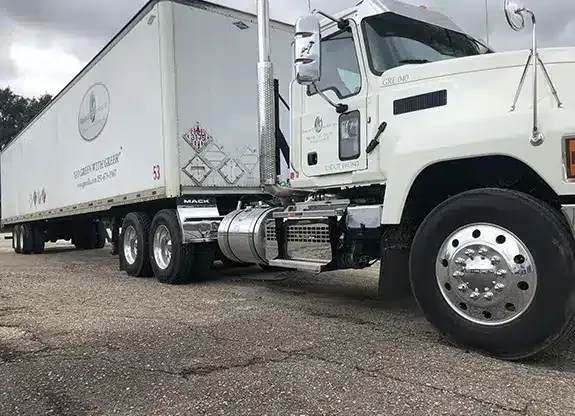
Greer-operated dry vans, box trucks, end dumps, roll-off boxes and flatbeds. Your waste does not change hands mid-route.
ExploreCaustic and hand sanitiser recovery that turns a disposal line item into a recovered material.
ExploreCourse library, Safety Data Sheet management, a safety plan builder and self-audits, in one compliance portal.
See the program
The destination is decided by the waste codes and the Land Disposal Restrictions, not by preference. Six routes a stream can take.
Thermal destruction of the organic molecule itself, at temperatures and residence times set by permit.
Incineration is the destination for streams that must be destroyed rather than contained: acutely hazardous P-listed wastes, contaminated debris, off-spec product that cannot be reclaimed, and anything a Land Disposal Restriction bars from a landfill until it is treated. It is the technology that produces a certificate of destruction rather than a certificate of disposal, which is the difference a liability-conscious generator is usually paying for.
Permanent placement of aqueous hazardous waste into an isolated formation thousands of feet below any drinking water source.
Class I injection wells are the most economical route for high-volume liquid streams that are mostly water — spent acids and caustics, rinse waters, process liquors — where incinerating the water itself would be paying to boil it. The well is regulated under the federal Underground Injection Control program, and the formation, the confining layer and the monitoring are all conditions of the permit.
Recovering the heat value of a solvent stream instead of paying to destroy it.
Spent solvents, paint-related waste and other high-BTU organics can be blended to specification and burned for energy recovery in industrial kilns rather than incinerated as a waste. For the generator it is usually the cheapest compliant route for those streams, and it is a recovery outcome rather than a disposal outcome — which matters if your facility reports waste minimization.
Chemical and physical treatment that takes an industrial effluent to a dischargeable specification.
Neutralization, precipitation, oil and water separation and filtration handle streams whose problem is concentration rather than composition: plating rinses, oily water, wash-down, tank cleanings. The treated water goes to a permitted discharge and the separated solids or sludges continue on their own waste codes to the technology those codes require.
Containment in a permitted cell, after treatment where the Land Disposal Restrictions require it.
Contaminated soil, filter cake, spent media and stabilized sludges go to a permitted landfill — hazardous or non-hazardous according to their codes and their treatment standard. The Land Disposal Restrictions are the part generators most often get wrong: a waste that fails its treatment standard cannot be landfilled as received, however inert it looks on the dock.
Streams that leave the site as waste and re-enter commerce as product.
Caustics can be recovered and reused rather than neutralized and discharged, and bulk hand sanitiser — the inventory a great many facilities are still holding — is an alcohol stream with real recovery value rather than a drum of liability. Electronics go to certified downstream processors for materials recovery and data-bearing device handling.
Under RCRA the generator owns the waste from the moment it is created until it is destroyed. That liability does not transfer when the truck leaves. What transfers is the work, and the paper that proves it was done.
Before anything is collected, the stream is characterized: what is in it, how it was generated, which EPA and state waste codes apply, and whether it is acutely hazardous. Greer profiles it from your process knowledge and analysis rather than asking you to guess a code, because the generator carries the liability if the code is wrong.
Waste profile sheetContainers are selected to the DOT specification for the hazard class, labeled, and marked with accumulation dates. Small quantities of many different chemicals — the shelf of a laboratory, a shutdown inventory, an abandoned store room — are lab packed: sorted by compatibility, cushioned and consolidated into overpack drums by a chemist.
DOT-spec containersHazardous waste leaves the site on a Uniform Hazardous Waste Manifest, EPA Form 8700-22, which names the generator, the transporter and the designated receiving facility. It is the document that follows the load and the one an inspector asks for first. Generators are required to keep their copy for three years.
EPA Form 8700-22Greer is a permitted hazardous waste transporter and moves the load on its own equipment — dry vans, box trucks, end dumps, roll-off boxes and flatbeds — rather than brokering it to whoever is cheapest that week. One company on the manifest between your dock and the receiving facility means one company to call when a question comes back.
Hazardous waste transporter permitThe stream goes to the technology its waste codes allow: incineration, deep well injection, fuels blending, wastewater treatment, stabilization and landfill, or reclamation. Land Disposal Restrictions decide what may be landfilled and what must be treated first, so the destination is a regulatory outcome, not a preference.
Certificate of disposalThirty-two services, twenty-one industries, eight states and sixty-six cities. Pick whichever way you already think about the problem.
Nothing matches that. Try a shorter word, or ask us directly.
Nothing matches that. Try a shorter word, or ask us directly.
Nothing matches that. Try a shorter word, or ask us directly.
A plating line, a refinery turnaround and a teaching laboratory generate completely different streams under completely different rules. Each page starts from what that facility type actually produces.
Each state writes its own hazardous waste rule on top of the federal one, and each state page names the agency that writes it. A permit that satisfies one regulator is not automatically the one the next state asks to see.

A price depends on four things: what the stream actually is, how much of it there is, how it can legally be packaged, and what a truck can reach at your site. You do not need to know the waste codes — describing the process that made it is enough to start.
Straight answers to what generators actually ask, drawn from the federal rules rather than from marketing copy.
Under RCRA a waste is hazardous either because it appears on one of the EPA lists (the F, K, P and U lists) or because it exhibits one of four characteristics: ignitability, corrosivity, reactivity or toxicity. That means a material can be hazardous waste without being labeled dangerous in any obvious way — a spent aqueous cleaner can be corrosive, and an off-spec product can be ignitable. If you are not certain, the profile step settles it before anything is collected.
Hazardous waste shipped off site travels on the Uniform Hazardous Waste Manifest, EPA Form 8700-22, unless the generator is a very small quantity generator whose waste qualifies for a specific exclusion. Small and large quantity generators manifest their shipments and keep the signed copy on file for three years. Greer prepares the manifest with the load and returns the signed copy once the receiving facility acknowledges it.
EPA sorts generators by how much they produce in a calendar month: very small quantity generators (up to 100 kg of hazardous waste), small quantity generators (100 to 1,000 kg) and large quantity generators (over 1,000 kg, or more than 1 kg of acutely hazardous waste). The category decides your accumulation limits, storage time and reporting duties, and it can change month to month — a single clean-out can move a site up a category.
Greer Enterprises serves Alabama, Florida, Georgia, Louisiana, Mississippi, South Carolina, Tennessee and Texas, dispatched from offices in Mobile, Alabama and Tampa, Florida. Transport is on Greer equipment across that footprint, and each state page names the agency that writes the rule in that state, because a permit that satisfies one state regulator is not automatically the one the next state asks to see.
Both. Lab pack service exists precisely for small volumes of many different chemicals — a university teaching lab, a shutdown inventory, a store room nobody has opened in a decade. At the other end, roll-off boxes and end dumps handle bulk soil and debris. The profile and the manifest work the same way at either scale.
Regulated medical waste is governed by state health and environmental rules rather than by RCRA, so it travels on its own documentation and to its own treatment technology. Greer serves hospitals, laboratories and other large healthcare generators directly, and its division BioMed Solutions handles regulated medical waste for clinics, dental offices, veterinary practices and other small healthcare generators on the Gulf Coast.
Less than most people expect. A description of the material, a rough quantity, and whether your site has a loading dock, a forklift and room for an 18-wheeler is enough to price the job. Analytical data and an existing profile speed it up but are not a prerequisite. If it is easier to describe than to type, call 251-679-1967.
An unidentified drum is a bigger problem the longer it sits. Send a photo and a description — identifying it is the first thing we do anyway.